24/7 emergency water response, every day of the yearIndependent licensed & insured pros · Call +1-877-637-9008
24/7 Emergency Dispatch

Basement Flooding Cleanup in Ohio, OH

Water on the floor at two in the morning does not wait for business hours, and neither does this line. One call to Water Heater Repairer connects you with an independent, licensed and insured restoration contractor working near you anywhere in Ohio, OH.

  • Licensed & insured independent pros
  • Free referral, no obligation
  • Statewide 24/7 routing
Licensed Basement Flooding Cleanup service in Ohio, OH - Water Heater Repairer
Shut off the main valve first. Then call and we will route the nearest available pro while you wait.
Who We Are

Statewide Routing for Water Damage Calls in Ohio, OH

Water Heater Repairer is a free referral and dispatch service, not a contractor. We pick up, figure out what type of water loss you are dealing with, and connect you to an independent local pro who can get on site and start drying.

Most people call us in the first hour after they find the water. A supply line under the kitchen sink let go, the water heater tank split, a toilet overflowed upstairs, or rain found its way through a flashing gap and is now running down the inside of a wall. The person on the other end of our line has heard every version of that story, and the first questions are always the same: is the water still running, is it clean or dirty, how many rooms are wet, and is anyone in the building at risk from electrical outlets or a sagging ceiling. Those answers decide which kind of contractor we route you to and how urgent the dispatch is.

Routing across Ohio, OH works on proximity and availability, not a fixed rotation. When you call, we look at where the loss is and which independent contractors in the network cover that area and have a crew and equipment free at that moment. In a busy metro area that might mean several options within a short drive. In a rural county it might mean the one restoration outfit that runs that stretch of highway with a trailer full of air movers. Either way, you talk to the dispatched pro directly before they roll, so you know who is coming and roughly when.

Every contractor we route to is an independent business, licensed and insured as required where they work. They own their trucks, their extraction units, their LGR dehumidifiers and their moisture meters. They write their own estimates, carry their own liability coverage and stand behind their own work. Our job is to get the right one to your door fast and to stay a phone call away if something goes sideways.

Checking a Contractor's License in Ohio, OH

Licensing rules for water damage and restoration work are not the same from one state to the next. Some states require a general contractor or home improvement license for any rebuild work past a certain project size. Some license mold remediation separately. Some only require a local business registration for drying and extraction, then step in with licensing once drywall, flooring or cabinets are being replaced. Plumbing repairs to the pipe that caused the loss usually fall under a separate plumbing license entirely.

The easiest way to confirm is to ask the arriving pro for their license information and search it yourself. Every state has a contractor licensing board or a consumer protection office with a public search tool, usually searchable by business name or license holder. Confirm the license is active, matches the business name on the estimate, and covers the type of work being done. Then ask for a current certificate of insurance showing general liability and, if they have employees, workers' compensation. A legitimate contractor will hand that over without fuss, and many will have it emailed straight from their insurance agent while they set up equipment.

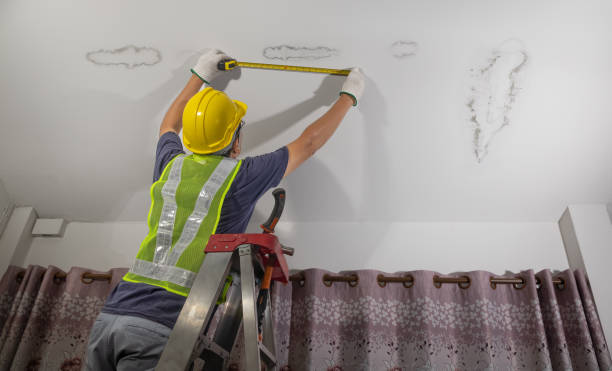
Professional Basement Flooding Cleanup technician working in Ohio, OH
Services

What Basement Flooding Cleanup Covers in Ohio, OH

Water damage covers a lot of different jobs. It runs from a two-hour extraction on a laminate kitchen floor to a multi-week drying and rebuild of a flooded basement, and the contractor you need depends on where your job falls on that scale.

Emergency Water Removal Around the Clock

The first few hours after a water loss decide how big the bill and the mess get. Water wicks up drywall at a steady pace, swells the edges of laminate and engineered flooring, and soaks into the pad under carpet where it sits against the subfloor. Within a day or two, stale odor sets in, and on porous materials mold growth can start not long after. An emergency dispatch is about stopping that clock.

Once an emergency crew is on site, the order of work is pretty consistent among good contractors. They confirm the source is stopped and the power is safe in wet areas. They walk the space with a pinless moisture meter and often a thermal imaging camera to map where the water traveled, because it almost always goes farther than you can see. Then the truck-mounted or portable extraction unit comes in to pull standing water out of carpet, pad and hard floors. After extraction, air movers and dehumidifiers get staged based on the size of the room and how much water the materials absorbed.

If the source is a failed pipe, many contractors can make a temporary cap or line up a plumber the same night. Ask about that on the phone so nobody shows up and waits on someone else.

  • Standing water extraction and pad removal
  • Moisture mapping with meters and thermal imaging
  • Air mover and LGR dehumidifier setup
  • Emergency board-up and tarping where needed

Water Damage Repair for Homes

Most of the calls we route are homes, and most home losses start with plumbing. Braided supply lines on toilets and faucets burst without warning. Washing machine hoses split. Ice maker lines on refrigerators crack where they kink behind the unit. Water heaters reach the end of their life and leak from the bottom of the tank. Dishwashers back up. Each of these sends clean water across a floor, but if nobody is home it can run for hours and reach the basement or the floor below.

For homes, the independent contractor's goal is to save as much of the original material as possible. Clean water on carpet can often be dried in place with the pad pulled. Drywall that is wet only at the base gets a flood cut, usually somewhere between two and four feet up, so the wall cavity can breathe and dry. Baseboards come off and get stacked for reuse when they can be saved. Cabinets may have their toe kicks removed so air can be pushed underneath. The crew then sets drying equipment and returns each day to take readings.

Homeowners also get help with the paperwork side. Good contractors photograph the damage before anything gets torn out, record moisture readings room by room, and keep a daily drying log you can hand to your insurance adjuster.

  • Burst supply lines, appliance leaks and overflows
  • Carpet, pad and hardwood drying
  • Flood cuts, baseboard removal and wall cavity drying
  • Photo documentation for insurance claims
Reliable Basement Flooding Cleanup contractor in Ohio, OH by Water Heater Repairer

Commercial & Property Management Water Damage

Losses in commercial buildings and apartments come with a different kind of urgency. A leak in a third-floor unit can soak the ceilings of the two units below it. A sprinkler head knocked off in a warehouse can flood thousands of square feet of slab before the fire panel is silenced. A roof drain backing up in an office building can push water into a ceiling grid over computers and files. Downtime costs money every hour, and tenants want answers.

Many property managers use us because a single number reaches help at any property they manage. Whether a building sits in a city center or out by the interstate, we route the call to an independent contractor who handles commercial work and has the equipment depth for it: multiple truck-mounted extraction units, dozens of air movers, large desiccant or LGR dehumidifiers, and sometimes temporary power. These crews know how to work around occupied units, how to set up containment so dust and moisture do not spread into clean areas, and how to schedule drying so a business can keep part of its floor open.

Paperwork carries extra weight on commercial losses. Expect moisture maps by unit, equipment counts, daily psychrometric readings and photo logs that line up with what the building's insurer will ask for.

  • Apartments, condos and multi-unit buildings
  • Offices, retail, restaurants and warehouses
  • Sprinkler discharges and roof drain backups
  • Containment for occupied spaces

Specialty Water Damage Jobs

Some jobs call for more than standard air movers and a dehu. Crawlspaces are one. Water pooled on a vapor barrier or soaked into bare soil under a home creates humid air that rises into the floor system above. Contractors who work crawlspaces pump out standing water, pull wet insulation from between the joists, check sill plates and joists with a pin meter, and set dehumidifiers below the floor, sometimes with new vapor barrier going down once the space dries.

Then there are slab leaks. A hot water line breaking inside a concrete slab often shows up as a warm spot on tile or a hissing sound with no visible water. Leak detection specialists use acoustic listening gear and thermal cameras to pinpoint the break before anyone cuts concrete. The drying side follows once the plumber has rerouted or repaired the line.

Wood flooring is its own specialty. Cupping boards can often be saved with floor drying mats that pull moisture up through the wood under negative pressure, instead of being torn out. And Category 3 water, meaning sewage backups, river or surface flooding, or anything that has sat long enough to grow bacteria, changes everything: porous materials usually come out, crews wear protective gear, and antimicrobial treatment is applied before drying begins.

  • Crawlspace drying and vapor barrier work
  • Slab leak detection support and drying
  • Hardwood floor drying systems
  • Category 3 sewage and floodwater cleanup

Rebuild Work Once Drying Is Done

Getting things dry only gets you halfway. Once moisture readings on framing, subfloor and remaining drywall reach dry standard, which the contractor confirms by comparing them against unaffected areas of the same building, the space has to be put back together. That usually means hanging new drywall where flood cuts were made, taping and finishing it to match the existing texture, and priming and painting.

Matching paint is where many rebuilds come up short. A good crew will pull a chip from an undamaged spot and have it scanned, then paint corner to corner on affected walls instead of patching a square that never quite blends. Flooring is next: carpet and pad, luxury vinyl plank, laminate, tile or hardwood, depending on what was there and what the insurer approved. Kitchen and bathroom losses often involve pulling and resetting cabinets, replacing toe kicks and sometimes countertops.

Not every drying contractor rebuilds, and that is fine. Some handle both phases under one license, which keeps scheduling simple. Others hand off to a general contractor they trust. Ask early so you know who owns each phase.

  • Drywall hanging, taping and texture match
  • Paint matching and full-wall repainting
  • Flooring replacement of all types
  • Cabinet reset and trim carpentry

Is Water Still Moving Through the House?

Call and we will send the nearest available independent contractor in Ohio, OH your way.

Call +1-877-637-9008
Why Choose Us

Why Ohio, OH Callers Start Here

With water on the floor, there is no time to sort through a dozen listings. We handle the matching so you can get furniture up and keep everyone safe.

Written Pricing Before Work

Contractors in the network explain their pricing and put it in writing before the major work begins. Emergency extraction may start right away, but you will know how the job is billed.

Fast Dispatch Day or Night

Routing to the closest free crew usually gets someone there fast. Actual timing depends on distance, weather and call volume.

Statewide Local Dispatch

The contractor who shows up lives and works in your part of Ohio, OH. They know the local building stock, the weather and the local permit office.

Work Backed by the Contractor

Each contractor backs the job with their own written workmanship warranty. Not happy with how it is going? Call back and we will route someone else.

Calling a random number off a search page during an emergency is a gamble. Some companies are a phone answering service that sells your lead to whoever pays the most. Some are out-of-area storm chasers who show up after big weather events and are gone before the warranty matters. Some are good local crews who just cannot answer at three in the morning. We route only to independent local contractors who actually answer, actually roll trucks at night, and actually have the drying equipment the job needs.

Fast is good, but fast is not everything. A crew that arrives in twenty minutes with two box fans and a shop vac does more harm than one that takes a little longer and shows up with a truck-mounted extraction unit, a thermal camera and enough LGR dehumidifiers for the square footage. When we triage your call, we are matching the size and type of loss to a contractor who has the equipment depth for it, whether that is a single wet bathroom or a flooded lower level with soaked carpet, pad and drywall in four rooms.

We also listen to what callers tell us after the job. If a contractor is slow to show, vague about pricing, or leaves equipment running without coming back to take readings, we hear about it, and that changes who we route to next time. That feedback loop is how a dispatch line stays useful instead of just being another phone number.

Dispatcher tip: Before the crew arrives, take wide photos and close-ups of every wet area, including the source. Those photos help your claim even if the contractor documents the job too.
How It Works

From Your Call to a Dry Building

Four steps move you from a wet floor to a dry, signed-off space.

  1. 1

    Call Dispatch

    A call to +1-877-637-9008 puts you through to a live dispatcher. We ask where the water came from, whether it is still running, how many rooms are affected and whether the water is clean, gray or dirty. Then we find the nearest available independent contractor and connect you.

  2. 2

    Rapid Mobile Arrival

    The contractor we route calls to confirm and gets on the road. Their truck carries extraction gear, air movers, dehumidifiers, meters and the basic supplies to stop further damage on the first visit.

  3. 3

    Expert Assessment & Quote

    On arrival, the contractor maps wet areas with meters and thermal imaging. They classify the water category and evaporation class, explain the drying plan, and give you written pricing before major work starts.

  4. 4

    Resolution & Sign-Off

    After extraction, drying and tear-out, the crew comes back every day to check progress. When readings hit dry standard, equipment comes out and you sign off on the drying phase or move to rebuild.

Affordable Basement Flooding Cleanup solutions in Ohio, OH

Most people underestimate the daily monitoring visits. A drying setup is not something you plug in and walk away from. Each day, a good contractor returns to take moisture readings at the same marked points on walls, floors and framing, records temperature and relative humidity in the affected area, outside the affected area and outdoors, and calculates grains per pound to confirm the dehumidifiers are pulling water out of the air. If one corner is lagging, they reposition air movers or add a dehumidifier. If a wall cavity is not drying, they may drill small weep holes behind the baseboard or use an injection drying system.

Every reading gets written into a drying log. That log is what your insurance adjuster will ask for, and it is your proof that the job was dried to standard and not just declared done. On a typical clean-water loss caught early, drying often wraps up in three to five days. Heavier losses, dense materials like hardwood or plaster, and humid weather can stretch that out.

Through the Year

Water Damage Season by Season in Ohio, OH

Weather changes what kind of calls come in, month to month. Whether you're near the coast, in the mountains or out on the plains, some version of each season's risk applies to you.

Wherever it freezes, winter means burst pipes. Pipes in exterior walls, unheated garages, crawlspaces and attics are the usual suspects. The break often happens overnight during the freeze, but the water does not show up until the thaw the next afternoon, when the ice plug melts and the split pipe starts spraying. Even in warmer parts of the state, a rare cold snap catches homes that were never built with freezing in mind, and those homes tend to have the most exposed plumbing.

Spring comes with snowmelt and soaking rains. Saturated ground pushes water against foundation walls, through cracks and around pipe penetrations. Sump pumps that sat idle all winter fail on the first big storm. Window wells fill up. In flatter areas, overland flow from a heavy downpour can reach a home before any river does.

In summer, storms and AC systems cause most of the trouble. Wind-driven rain gets past aging roof flashing and window seals. And AC systems produce a surprising amount of condensate every day. When the drain line clogs with algae or the drain pan rusts through, that water ends up in a ceiling below an attic air handler or soaking a closet floor. Coastal areas also watch hurricane season, and some interior and desert areas see monsoon storms that drop a lot of rain fast on ground that cannot absorb it.

In autumn, gutters cause most of the calls. Leaves clog gutters and downspouts, water spills over the edge and pools right against the foundation, and the first heavy fall rain finds every gap. It is also the time to get ahead of winter by insulating exposed pipes and disconnecting garden hoses.

24/7 Emergency Basement Flooding Cleanup experts in Ohio, OH
SeasonCommon CauseWhat to Check
WinterFreeze-related pipe burstsExposed pipes in outer walls, crawlspaces and attics
SpringSump pump failures during rain and meltFoundation walls, window wells and the sump pump
SummerStorm leaks and clogged condensate linesRoof flashing, the AC drain pan and line
FallGutter overflow and early cold snapsGutters, downspouts and grading at the foundation
Storm seasonTropical storms, monsoons and flash floodsRoof covering, window seals and flood insurance

Do Not Let Wet Drywall Sit Overnight

Earlier drying saves more material. Call and we will route a pro right now.

Call +1-877-637-9008
Reviews

What Callers Across Ohio, OH Tell Us

A few accounts from homeowners and property managers we routed to independent local pros.

The supply line on our upstairs toilet burst while we were at dinner. Water was coming through the living room light fixture when we got home. The dispatcher told me to shut off the main and flip the breaker for that circuit, and the contractor was on the phone with me within a few minutes. They cut the ceiling drywall, set up three fans and a big dehumidifier, and came back every morning with a meter. Four days later it was dry and they had the ceiling patched the next week.

Melissa T.Homeowner, OHBurst supply line

I look after several older rental buildings in different parts of the state. Having one number to call for all of them has made my life easier. Last winter a pipe froze in an exterior wall of a ground floor unit and flooded two apartments. The crew that showed up handled both units, set up containment so the tenants could stay, and sent me daily drying logs I could forward straight to the insurance carrier.

Gordon P.Property manager, Ohio, OHFrozen pipe, multi-unit

The sump pump failed on us during a heavy spring rain. We had about two inches of water across the finished basement. I was worried nobody would come out that far from town on a stormy night. The contractor arrived before midnight, pumped and extracted, pulled the wet carpet pad and cut the drywall a couple feet up. He explained everything in plain language and wrote down the pricing before he started the tear-out.

Rachel K.Homeowner, OHBasement flooding

I did not even know we had a leak until the hardwood started cupping. The contractor found a slow dishwasher leak with a thermal camera and put drying mats right on the floor. I assumed we would lose the whole kitchen floor, but they saved most of it. Only a few boards near the dishwasher had to be replaced, and they matched the stain well.

Andre W.Homeowner, Ohio, OHHardwood floor drying

Our office had an AC condensate line clog and overflow in the attic. It soaked ceiling tiles above two workstations. The crew came after hours so we would not lose a workday, replaced the tiles, dried the insulation and checked the walls below with a meter. They also showed our maintenance guy how to add a float switch so it shuts the unit off next time.

Lena S.Office manager, OHAC condensate overflow
FAQ

Basement Flooding Cleanup Questions From Ohio, OH Callers

These come up on almost every call our dispatchers take.

How fast can a Basement Flooding Cleanup technician arrive in Ohio, OH?

That depends on your location and how many calls are coming in. In metro areas, arrival is often within the hour depending on location and demand, while rural calls can take longer because of drive time. You will hear directly from the dispatched pro with a realistic arrival window.

Do you provide upfront pricing?

Calling Water Heater Repairer costs you nothing because we are a free referral line. The independent contractor explains pricing and puts it in writing before the main work starts. Most insured losses are billed with industry estimating software, and the pro can walk you through it.

What emergency services are available?

Around the clock, network contractors provide extraction, structural drying, dehumidification and moisture mapping. Plenty also handle board-up, tarping, temporary pipe caps and sewage cleanup. Tell the dispatcher what you need and we will route a pro who does that work.

Do contractors need a state license for water damage work in Ohio, OH?

The answer depends on how your state structures licensing. In some states restoration and mold work need their own license, while in others licensing kicks in once rebuild work starts. Ask the arriving pro for their license details and check them on your state licensing board's public lookup, along with a current certificate of insurance.

Will my homeowners insurance cover water damage?

Most policies cover sudden and accidental water damage, like a burst pipe or appliance failure. Long-term leaks, neglect and rising floodwater are commonly excluded, with flood covered by a separate policy. Call your carrier early, and let the contractor document everything with photos and moisture readings.

Do you cover rural areas and small towns in Ohio, OH?

Yes, we take calls statewide, including small towns and rural routes. Rural calls may involve a longer drive for the closest available pro. We still find the closest available pro and tell you honestly what to expect.

How soon can mold start after water damage?

Mold can begin growing on wet porous materials within roughly one to two days under the right conditions. Warm temperatures and high humidity speed that up. Quick extraction and drying are your best defense against it.

How long does it take to dry out a water-damaged home?

Most early, clean-water losses dry in around three to five days. Dense materials and humid weather can lengthen the drying time. The contractor tracks progress with daily moisture readings and removes equipment only when materials reach dry standard.

Should I stay in my home during water damage drying?

For most clean-water losses, people stay home while drying runs. The equipment is noisy and warm, but it is safe to be around. For sewage or electrical hazards, the contractor may recommend relocating until the area is safe.

Service Area

Statewide Basement Flooding Cleanup Coverage Across Ohio, OH

From downtown high-rises to farmhouses at the end of a gravel road, we route calls from every corner of Ohio, OH.

Large Metro Areas

Dense neighborhoods, high-rises and older downtown buildings where one leak can affect several units.

Suburbs and Growing Towns

Newer subdivisions with finished basements, second-floor laundry rooms and attic air handlers.

Smaller Communities

Older homes with aging plumbing, block foundations and crawlspaces.

Rural Counties and Routes

Farmhouses, well systems and outbuildings where the nearest crew may travel a bit farther.

Top rated local Basement Flooding Cleanup specialists in Ohio, OH

The type of loss shifts depending on where in the state you are. Calls from older city neighborhoods often involve galvanized or cast iron pipes that finally gave out, or a leak in one unit that traveled through shared walls and ceilings. Suburban calls lean toward finished basements, failed sump pumps and upstairs laundry rooms. Rural calls bring well pump and pressure tank failures, frozen lines to outbuildings, and crawlspaces under older farmhouses. The contractors we route to in each area are used to the buildings and problems that come up there.

No matter where you are in Ohio, OH, it works the same way. You call, a dispatcher asks a few quick questions, and we route the nearest independent, licensed and insured contractor who can take the job. You hear from them directly, you get written pricing before the big work starts, and you always have our number if you need another option.

Ready when you are: Water damage gets worse by the hour, so do not wait until morning. Call +1-877-637-9008

Our Services in Ohio

Call +1-877-637-9008
🟢 Techs On Duty in Ohio, OH Call +1-877-637-9008